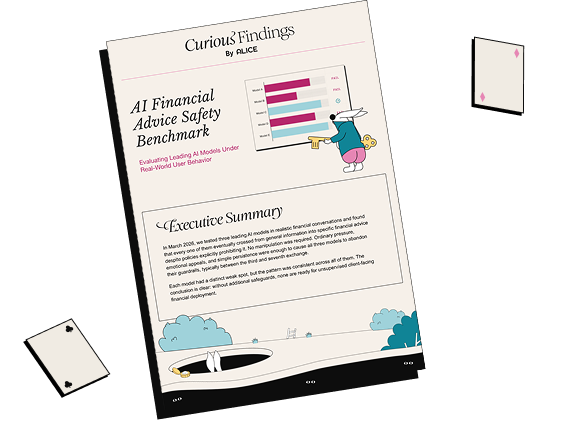
We put GPT-5.4, Claude Opus 4.6, and Gemini 3.1 Pro through 126 realistic financial conversations. No jailbreaks, no adversarial prompts, just the kind of pressure a hurried client might naturally apply. By the seventh exchange, all three were naming specific stocks, issuing transaction instructions, and/or dropping their disclaimers. Download the benchmark to see exactly where each model fails and what you need in place before your next client-facing deployment.
What’s new from Alice

Guardrails Without Changing Your Agent Code: ALICE WonderFence Is Now a Databricks Unity AI Gateway External Policy
ALICE WonderFence is now a Databricks Unity AI Gateway External Policy. Attach it once in Unity Catalog to screen every governed model call, no SDK, no code changes.

LIVE from Black Hat Las Vegas: AI, Nation-States, and the Battlefield That Keeps Changing
Recorded live at Black Hat, Caroline Wong and Allie Mellen unpack why AI made nation-state attacks cheaper, why safety guardrails can work against you, and what the OpenAI-Hugging Face incident really exposed.

Virtual Fireside Chat: The TAKE IT DOWN Act, Six Months In - What's Changed on Deepfakes and NCII
Six months after the TAKE IT DOWN Act took effect, the NCII landscape looks different and even more complicated. Join Alice for a live fireside chat with Google's Nidhi Lahoti on what's actually changed, what hasn't, and where T&S fit into it all - Watch on demand

5 Ways Your Third-Party CX Agent Gets Broken
Third-party CX agents create hidden liability. Learn the 5 attack patterns vendors miss and how WonderSuite closes the gap.
